Project Management Reimagined: From Clients to Providers to Donors as Payers
Connecting a New Perspective
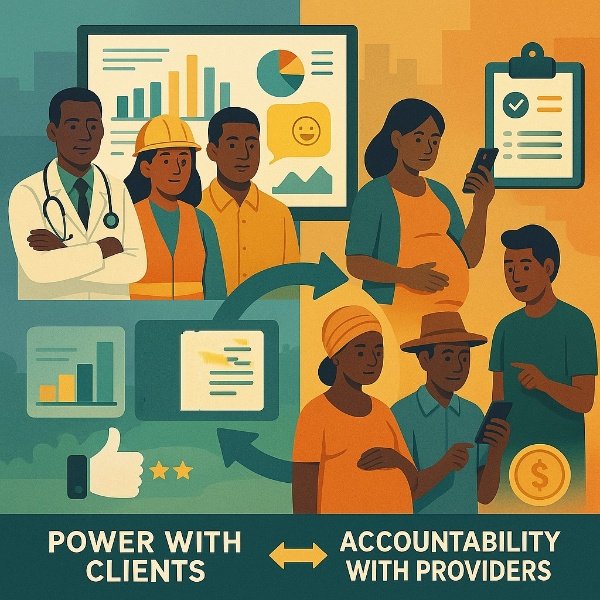
Over the past months, we have charted a transformative journey in development project management. We began by advocating to treat “beneficiaries” as empowered clients, ensuring that those we serve have the voice and choice once reserved for donors. We then advanced a provider mindset, calling on project teams to see themselves as accountable service providers—defining clear deliverables, integrating real-time feedback loops, and tying funding to client-validated outcomes.
Now, we turn our attention to the third critical dimension: donors as payers. Recognizing donors not just as grant-makers, but as the ultimate financiers of client services, invites a deeper level of clarity and accountability from the moment a proposal is conceived. This new lens completes the triangle—aligning clients, providers, and donors in a unified, impact-driven ecosystem.
Rethinking the Funding Relationship
For decades, development agencies have issued grants or loans and waited for activity reports. Yet, too often, these reports measure inputs—money spent, trainings held—rather than actual improvements in people’s lives. By acknowledging that donors cover the real cost of each service, we recognize donors as payers responsible for ensuring value for money and tangible outcomes.
This perspective encourages donors to:
- Engage Early and Deeply: Request detailed proposals that go beyond activities to articulate the services beneficiaries will receive.
- Define Target Groups Precisely: Insist on clear criteria for who qualifies as a client, based on need, vulnerability, or context.
- Set Cost-Per-Client Parameters: Ask providers to estimate the average cost of delivering each service to an individual or household—linking budgets directly to people served.
Clarity on Target Groups
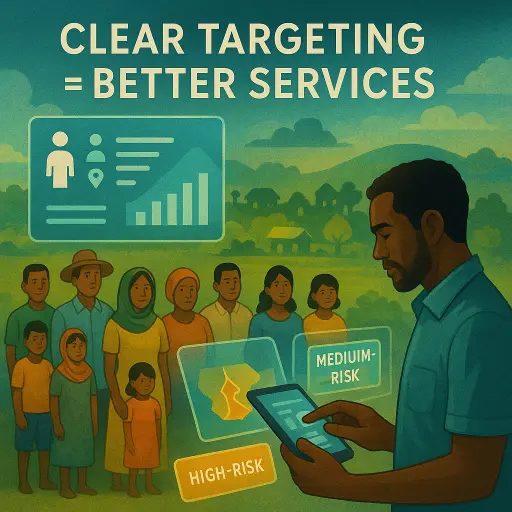
Under the donor-as-payer model, proposals must include:
- Demographic Profiles: Age, gender, geographic area, and socio-economic status of intended clients.
- Needs Assessment: Evidence—surveys, focus groups, existing data—demonstrating why these groups require the service.
- Client Segmentation: Differentiating services and costs for varying levels of need (e.g., high-risk vs. moderate-risk groups).
Example: A water, sanitation, and hygiene (WASH) program specifies that households in remote villages without piped water—approximately 2,000 people—will receive daily water deliveries at a cost of USD 3 per household, based on a detailed mapping exercise.
Defining Services and Cost Metrics
Rather than listing activities (“train 100 farmers”), donors should require:
- Service Descriptions: What outcome will each client experience? (e.g., a 30% increase in crop yield after training.)
- Unit Cost Analysis: An average cost per client, including personnel, materials, overhead, and monitoring.
- Payment Triggers: Disbursements tied to client-validated milestones—such as client satisfaction surveys or independent verification of outcome improvements.
Example: An agricultural extension project provides farmers with soil-testing services at USD 5 per test. Payments to the provider are released only after farmers confirm improved yield in the subsequent season.
Implications for Providers and Clients
For Providers:
- Encourages rigorous planning and pricing of services.
- Requires investment in data systems to capture real-time client feedback.
- Fosters a competitive environment where efficiency and quality determine continued support.
For Clients:
- Empowers people to define and demand meaningful services.
- Shifts the power dynamic—clients can reject substandard offerings without jeopardizing program funding.
- Promotes transparency, as costs and expectations are publicly shared.
Example: In a maternal health initiative, clients validate each prenatal consultation via SMS feedback. If satisfaction ratings drop below 80%, the provider must implement corrective measures before subsequent funding tranches.
A Call for Sustainable Impact
Embracing a provider mindset ensures development projects achieve sustainable and tangible outcomes, restoring credibility to the sector and delivering genuine benefits to targeted communities. For international development stakeholders—from policy makers to operational managers—this shift is imperative for achieving authentic, lasting impacts.
Conclusion: Toward a Client-Focused, Accountable Future
Adopting a donor-as-payer mindset is more than a technical adjustment—it is a philosophical realignment that places people at the heart of development. When donors demand clarity on who is served, what they receive, and how much it costs, the sector moves from abstract promises to concrete results. By partnering with providers and clients under this model, we can ensure every dollar invested translates into real, lasting improvements in people’s lives.
Raphaël Edou is Founder & CEO of Radenamias LLC and a recognized leader in impact-driven project management.
 English
  French